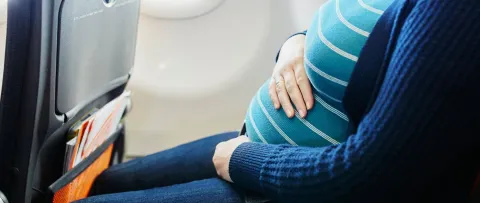
Travelling pregnant: what you need to know before you go
Pregnancy is not a contraindication to travel unless the pregnant woman has risk factors such as twins, high blood pressure, diabetes, etc. Here are our recommendations for travelling with peace of mind during pregnancy, including modes of transport, destinations and travel insurance for pregnant women. Don't forget, of course, to always ask your gynaecologist or family doctor for advice before you leave.
When is the best time to travel while pregnant?
The ideal time to travel is during the 2nd trimester, i.e. between the 14th and 26th week from the date of fertilisation. It's complicated to travel in the 1st trimester because the mother-to-be is very tired and may feel nauseous quite frequently. It's also an intense period for the foetus.
The same applies to the 3rd trimester, when childbirth is approaching and the mother-to-be's mobility is decreasing, so it's best to stay close to home, or at least to the maternity hospital where the baby will be born.
The advantages and disadvantages of different modes of transport when travelling pregnant
Flying during pregnancy
When there are no particular complications, it is possible to take the plane but under two important conditions:
1- Follow medical recommendations. There are no contraindications for pregnant women in their 1st trimester, but a plane journey can worsen nausea, vomiting and fatigue. However, doctors advise against flying from the 36th week onwards (32nd week for twin pregnancies).
2- You must comply with the conditions imposed by the airlines. Each airline imposes its own rules regarding the stage of pregnancy. In fact, they are not bound by doctors' recommendations and set their own number of weeks after which they no longer want a pregnant woman to board. Airlines may also ask for documents to be provided on boarding, such as a medical certificate or a letter from the gynaecologist.
Our advice:
Before taking your flight, let your doctor or gynaecologist know so that you can get his or her opinion.
Once you've bought your plane tickets, to avoid any unpleasant surprises, tell your airline that you're pregnant (you may get preferential treatment!).
Don't forget to wear compression stockings to promote blood circulation and prevent phlebitis, drink water and get up to walk around the plane every hour.
>> Calculate your travel insurance premium here <<
Pregnancy and long car journeys
If everything is going well and the pregnancy is not too advanced, there's no need to worry about taking to the road. However, as far as possible, avoid bumpy roads, long journeys and, of course, always fasten your seatbelt under your tummy. During the 3rd trimester, long journeys are really not advisable as the sitting position and fatigue of the journey could cause contractions and possibly premature delivery.
Our advice:
Take the passenger seat at the front of the car and make sure you have as much room as possible to stretch out your legs. Take regular breaks (every 2 hours) to stretch your legs and breathe in the fresh air. Once you've arrived, it's essential to get some rest.
Travelling by train when pregnant
Trains are still the best way to travel when you're pregnant. It's reliable, not very tiring and allows you to move around, get up and walk regularly without too many constraints.
Our advice:
When reserving your seats, take a place in the middle of the car as the vibrations are less strong there. Of course, don't hesitate to ask for help with your luggage, because whatever the stage of pregnancy, it's always inadvisable to carry heavy things that could put pressure on the uterus. Ask about luggage transport services if you're travelling alone!
Travelling by motorbike when pregnant
Unsurprisingly, this mode of transport is not really recommended during pregnancy. Road vibrations and high noise levels can clearly present risks for the mother-to-be. You need to use common sense and assess all the risks.
Our advice: avoid vibrations and always seek medical advice.
>> Calculate your travel insurance premium here <<
Where should I travel when I'm pregnant?
You can travel while pregnant, but depending on your trimester and the potential complications you may encounter, you should always opt for destinations close to home and at low altitude. If you want to travel with peace of mind while pregnant, you should also opt for destinations where the medical infrastructure is of a high standard and where the tourist sites and activities are not too exhausting for you.
Our advice to avoid any risk of infection:
Don't go to endemic areas where infectious diseases such as malaria, yellow fever, chikungunya, Zika or dengue fever are real dangers for you and your baby. If you really want to travel to a country affected by these diseases, ask your gynaecologist or doctor for advice on how best to protect yourself and prepare the right medication. Check that your vaccinations are up to date, and see if any are contraindicated for pregnant women.
The benefits of taking out travel insurance for pregnancy
There are 3 possible cases:
1- The trip is taking place in Switzerland or an EU member state. In this case, it is important for the mother-to-be to apply for the European Health Insurance Card if it is not already on her compulsory health insurance card. This card gives you access to public medical facilities in your destination country without having to pay in advance, and on the same basis as those insured locally. But there is one thing you should be aware of: depending on the country, the costs may or may not be covered by your compulsory health insurance. You will have to pay the rest unless you take out travel insurance, in which case you will be reimbursed the amount claimed.
2- The trip is to a foreign country outside the EU and Switzerland. In the event of an emergency, your health insurance and any mutual insurance companies will only reimburse the amount paid for equivalent treatment in Switzerland. Medical costs can be very high in some countries, such as the United States, and the bill can quickly become exorbitant. That's why you need pregnancy travel insurance, so that you can deal with any emergencies and travel while pregnant as calmly as possible.
3- The trip is taking place in Switzerland. In the event of an emergency, Europ Assistance will help you anywhere, 24 hours a day, with just one call.
>> Calculate your travel insurance premium here <<
Travel insurance: a must-have for worry-free travel during pregnancy
When you take out travel insurance for your pregnancy, depending on the plan you choose, we'll cover your medical expenses abroad and in Switzerland up to CHF 250,000. In addition to this health cover, you benefit from solid insurance and assistance guarantees in the event of the unexpected: cancellation or interruption of your trip, repatriation, lost luggage, unforeseen expenses, etc. As you can see, wherever you go, Europ Assistance ensures you have a worry-free trip.
Our advice:
Be careful about the insurance included with your credit card. They often offer insufficient financial security to cover very high medical costs abroad. What's more, their assistance services are sometimes limited and only cover the cardholder. And finally, their cover only applies to what you have bought with the card.