How to combat motion sickness?
Whether you're traveling by sea, air, or by car, motion sickness — also known as "kinetosis" — is a balance disorder that can cause general discomfort, nausea, and mild dizziness.
In this article, we share with you:
- practical tips to apply before and during the journey to reduce the effects of seasickness, airsickness, or carsickness
- explanations about the causes of motion sickness
- information on the profiles most likely to be affected
What are the tips to avoid seasickness, airsickness, or carsickness?
Eat before you leave
- Eat light before traveling. Avoid traveling on an empty stomach.
- Avoid coffee, alcohol, and fatty foods.
- Choose solid meals and avoid liquid ones.
- Snacking on a biscuit or a piece of bread during the trip will keep your stomach working.
- Chewing gum can also help relieve symptoms.
Drive smoothly and reasonably
- Are you the one driving? Drive smoothly (especially in turns), without excessive braking or acceleration. Anticipate maneuvers, turns, and obstacles.
- In a car, stop regularly to get some fresh air, rest, and stretch your legs (at least every 2 hours).
Keep your eyes in the direction of travel
- In a car, sit in the front or in a centered rear seat.
- On a train, tram, or bus, choose a seat facing the direction of travel.
- On a boat, choose a seat at the waterline level, rather than in a low or high cabin. This can help reduce seasickness.
- Let your gaze follow the movement of the journey and avoid staring at a screen, book, or stationary object for too long.
- Chat with other passengers — it's a great way to distract yourself from the discomfort and shift your focus away from motion sickness.
>> Traveling soon? Make sure you're properly insured! <<
Good habits to adopt during the trip
- Ensure good ventilation: fresh air helps reduce discomfort.
- Avoid focusing on the possibility of getting sick — anticipation or anxiety can sometimes worsen the sensation.
- If you're prone to motion sickness, keep a small bag within reach, just in case.
Medical solutions as a last resort
- If nothing works, consider treatments for motion sickness: medications (cocculine, mercalm...), patches or tablets, but consult a healthcare professional before taking any medication, especially if children are traveling with you.
- Be careful, some medications cause drowsiness — they are therefore incompatible or even dangerous when driving!
Why do we get motion sickness?
Motion sickness, also known as kinetosis, is caused by sensory imbalance. When the brain receives conflicting signals — for example, the eyes focus on a stationary object while the inner ear senses movement — it cannot reconcile them.
This mismatch leads to symptoms such as nausea, dizziness, discomfort, hot flashes, and sometimes vomiting.
How to prevent and relieve seasickness
Seasickness is very common on small boats or in rough seas. Here are some tips to help reduce it:
- Choose your spot on the boat carefully: sit near the center of the boat, at the waterline level. Avoid cabins that are too low or too high.
- Fix your gaze on the horizon: looking into the distance helps stabilize visual cues. It's even better if you can see a piece of land far away.
- Avoid sudden movements: stay seated or lying down if possible.
- Breathe deeply: good oxygenation helps calm nausea.
- Use acupressure wristbands: available at pharmacies, they can relieve certain symptoms.
- Opt for short crossings: if you're sensitive, avoid long cruises.
Is motion sickness common?
About 5% of people traveling by motor vehicle are affected.
For seasickness, the frequency increases depending on the size of the boat (more common on smaller ones) and sea conditions (calm or rough).
In airplanes, small aircraft and sudden altitude changes also promote episodes of kinetosis..
Who is most sensitive?
Anyone can suffer from it, but some groups are more vulnerable: children between 3 and 12 years old, adults over 60, women — especially during pregnancy.
Sensitivity increases when fasting, tired, stressed, or anxious due to previous episodes. Strong smells, noise, or excessive heat can also worsen symptoms.
Do animals get motion sickness?
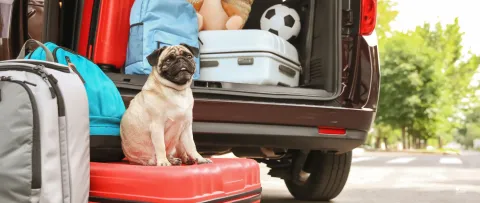
Our four-legged companions, like cats and dogs, are not spared from motion sickness. Suitable veterinary treatments exist to help them travel more comfortably. A quick visit to the vet before departure can make all the difference for them… and for you!