Fear of flying: our advice on how to cope
Are you scared to death of flying? Often difficult to explain rationally, this phobia affects more people than you might think. Around 1 in 3 people are affected by aviophobia (fear of flying) or aerodromophobia (fear of air travel), and 1/10 never take a plane because of this anxiety.
Unfortunately, when we like to travel, it narrows down the possible destinations, even if on paper we can travel anywhere by sea and/or land: often the time it will take is very discouraging.
Is it safe to fly?
Even if people suffering from this phobia are aware that their feelings are excessive and irrational, the emotional distress they experience is so great that they avoid flying altogether, despite the fact that it remains the safest and fastest means of transport. In theory, you have a 1-in-30-million chance of being involved in a plane accident (it's 1/15000 for cars).
But what about turbulence? You don't have to be afraid of it. Turbulence is simply turbulent air currents, comparable to a bumpy road in a car. Aircraft are designed to withstand even the most severe turbulence. They can withstand loads far greater than those actually experienced. And aircraft maintenance is regular and thorough.
Airline employees also meet high safety standards. Pilots undergo comprehensive training and are able to handle the most diverse flight situations with ease. The entire crew is also well trained and carefully selected. Added to this are the various security measures at the airport and for each individual passenger.
Symptoms of fear of flying
Before the flight, anxious travellers experience a feeling of stress and discomfort as they think about the journey ahead. This feeling intensifies as the departure date approaches.
During boarding or the flight, the following symptoms can occur: stress, sweating, trembling, nausea, dizziness, palpitations, hyperventilation, the urge to cry, etc. This can also lead to an anxiety attack.
The causes of this fear of flying
Among the most common causes are :
- fear of the unknown (for someone who has never flown before)
- fear of losing controlstressful past experience
- fear of being locked in (claustrophobia)
- fear of heights (dizziness or a phobia when looking out of the window)
- fear of having an accident or crash
- prejudices and disaster scenarios that are unlikely in reality (the door opening mid-flight, the plane not withstanding a storm or turbulence, the risk of breaking down, etc.)
- travel stress (crowds at the airport, checks, boarding, waiting)
- noises considered suspicious during the flight (e.g. engine noise), turbulence...
How can you overcome your fear of flying?
Top tips before you leave
Don't hesitate to find out all you need to know about air travel, including take-off, landing and safety precautions... That way, you'll be more reassured when you actually get there.
Talk to your friends and family about your travel plans, and ask people who regularly travel by plane to tell you about their (positive) experiences.
Choose your seat on the plane as soon as you book, if possible, or visualize its location
Try to relax before your trip: get a good night's sleep before departure, prepare your luggage and travel documents well in advance, arrive early at the airport, wear comfortable, appropriate clothing and footwear
Don't eat too much (to avoid nausea) and avoid stimulants (coffee, strong tea, alcohol...).
Top tips for your trip
Talk to the flight attendant about your anxiety, so you don't get trapped in it, and ask for explanations about noises or events (turbulence, air pocket...) that frighten you
Breathe calmly during take-off and landing
Think about distracting yourself: a book, a game on a tablet, music, a conversation.
Relax your body: do a few relaxation exercises in a seated position
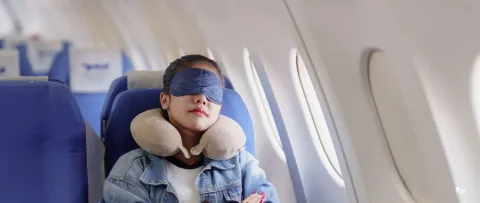
Use noise-canceling headphones, a cervical pillow, a sleep mask to make yourself comfortable.
Other solutions to overcome this fear
Learn about aviation technology
Find out how aircraft are built and how they work. Find out more about air traffic control and pilot training, so you can understand everything there is to know about this mode of transport.
Take a course
There are special courses to help you overcome your fear of flying. In these courses, you work with experts and other concerned people to alleviate your fears. For example, you'll learn about aviation technology, safety protocols and coping strategies. The exchange with others is encouraging for those affected, and offers you a support network.
Learn relaxation techniques that distract you from negative thoughts
Relaxation exercises can be found in books on personal development or in books on cognitive behavioral therapy.
Take medication
You can also fight your fear of flying by taking medication. It's very important to seek advice from your doctor's surgery beforehand. Only medical experts can assess your personal situation and prescribe suitable medication. Tranquilizers and anti-anxiety drugs can help alleviate symptoms. Ask your doctor for advice on the best option and possible side effects.
Relaxed travel with Europ Assistance
There is no such thing as insurance against fear of flying - but Europ Assistance ensures that you can relax and enjoy your trip. Because our travel insurance offers you the best benefits and protection.