Hiking holidays: all our tips
A hiking trip allows you to escape the stress of everyday life, do something good for your health, and fully enjoy nature. Although most hikers are over 50, more and more young people are also getting interested.
Whether you're booking a hiking trip for beginners or experienced hikers, careful planning will allow you to enjoy your walking adventure safely and worry-free.
In this article, you'll find many tips such as:
- Choosing a hiking destination: Decide whether you want to hike in Switzerland, elsewhere in Europe, or on another continent. Popular trails with short travel distances can be found, for example, in the Swiss Alps, Austria, or Germany.
- Determining the type of hike: Do you prefer a circuit or a hike from a fixed base? During a stay in the Alps, consider whether you’d rather walk peacefully through valleys or seek adventure at higher altitudes.
- Setting the travel period: Find out the best season for your destination. Spring, summer, and autumn are generally ideal for hiking.
- Planning the trip in advance: Start planning early to get the best deals and avoid stress.
- Preparing your hiking gear: Bring waterproof and breathable clothing, wear sturdy hiking boots. Take light, nutritious snacks and plenty of drinks. Your hygiene items should be small and practical.
- Organizing your travel protection: Prepare a first-aid kit with essential medications and check your vaccination coverage in advance.
The most beautiful hiking destinations in the world
Start by deciding whether you want to spend your hiking holiday in Switzerland, elsewhere in Europe, or on another continent. The choices are vast! Here are some of the most beautiful hiking regions in the world and their unique features. Choose the one that fascinates you the most!
Hiking regions in Switzerland
Switzerland’s landscapes are remarkably diverse, as are its hiking trails: from family-friendly walks to demanding alpine routes. Each region offers a unique charm: the Valais Alps attract seasoned hikers with their majestic peaks, sparkling glaciers, and crystal-clear mountain lakes.
The Bernese Oberland, with its flower-filled meadows, traditional chalets, and spectacular views of the Eiger, Mönch, and Jungfrau, is ideal for varied hikes. In the Jura, tranquility reigns: peaceful forests, gentle ridges, and panoramic views of the Alps and lakes.
Other must-see hiking destinations in Switzerland:
- Ticino: Mediterranean atmosphere, wild valleys, and balcony trails
- Engadine: postcard landscapes, turquoise lakes, and typical villages
- Appenzell: rolling green hills, living traditions, and well-marked trails
Hiking destinations in Europe
In other European countries, you’ll also find hiking regions rich in diversity and adventure. Head to Austria or Germany, for example—there’s something for every level. How about a trip to South Tyrol? The Dolomites captivate with their striking rock formations and well-maintained trails. Prefer the south? Choose the Pyrenees, between Spain and France, with their many peaks over 3,000 meters and historic trails. If you enjoy temperate climates, the Scottish Highlands are perfect for you, with their untouched nature and wild beauty.
Other beautiful hiking regions in Europe:
- Tatra National Park (Poland/Slovakia): breathtaking mountain landscapes and crystal-clear lakes
- Madeira (Portugal): varied trails through lush vegetation
- Cinque Terre (Italy): coastal hikes through steep vineyards
Hiking trails around the world
If you want to go further, you’ll find trekking routes all over the world. The Inca Trail in Peru takes you through the Andes on historic paths to stunning panoramas and the ruins of Machu Picchu. In Asia? In the Himalayas of Nepal, demanding high-altitude hikes and spectacular views await you. The Milford Track in New Zealand is considered one of the most beautiful trails in the world: this 4-day trek leads you through the untouched nature of Fiordland National Park and will leave you in awe.
Other impressive trekking destinations:
- Torres del Paine (Chile): spectacular glacial landscapes and remote trails
- Drakensberg Mountains (South Africa): valleys, waterfalls, and unique flora and fauna
- Overland Track (Australia): hiking across the plateaus and wilderness of Tasmania
How to choose the right difficulty level for a hike?
Before choosing your hiking route, you should consider which level of difficulty suits you best.
Hiking trips for beginners
Routes mainly follow well-maintained paths without significant elevation changes. Daily hikes of three to four and a half hours are easily manageable with a bit of endurance.
They are especially suitable for those who are new to hiking and looking for relaxation.
Easy hikes
Make sure to choose routes that don’t exceed five hours per day. Without technical knowledge, you should only opt for gentle and easily passable elevation changes. A basic level of physical fitness is enough to enjoy these trails.
Hiking for experienced people
As an experienced hiker, you can choose hikes with altitudes between 1,500 and 2,500 meters. You’ll walk on rocky, sometimes unstable paths. Excellent physical condition, good walking stability, and no fear of heights are absolutely necessary.
Different types of hiking holidays
Depending on your personal preferences and fitness level, you can organize your nature getaway in various ways. On a multi-day hiking tour, you hike from one section to another and spend the night in different accommodations. This type of trip is ideal if you want to discover new places every day and enjoy a variety of landscapes.
On hub-based hikes, the starting point for your daily excursions remains the same. From your accommodation, you set out on hikes in the surrounding area.
Advantages: you don’t have to constantly change accommodations while still exploring different routes, and you can also hike lighter (less gear to carry).
There are also specific types of hiking trips, such as:
- Mountain hiking: demanding routes in high-altitude mountains
- Lowland hiking: easy to moderate hikes in flat or gently rolling landscapes
- Leisure hiking: relaxed walks focused on gastronomy and the enjoyment of nature
- Long-distance trails: such as the Camino de Santiago or the Appalachian Trail, requiring endurance and good planning
- Speed hiking: fast-paced hikes combining physical challenge and immersion in nature
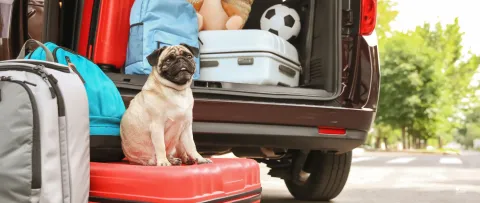
Hiking holidays with a dog: what should you keep in mind?
Hiking holidays are very suitable for families with dogs. However, certain points must be considered to ensure your four-legged companion’s safety.
Equipment and safety for dogs on hikes
A comfortable collar and a suitable leash are especially important. In steep or rocky areas, a harness with a handle offers more safety. For breaks, water bottles with an integrated bowl are very practical for giving your dog water or a quick energy boost.
Practical and eco-friendly: sustainable waste bags are a greener alternative—make sure to dispose of them in residual waste after the hike.
A first-aid kit is also essential and should include important documents such as the pet passport, microchip number, and insurance copies.
In some cable cars or lifts, wearing a muzzle or snout loop is mandatory—get your dog used to it as early as possible.
What to watch out for during the hike
The appropriate walking pace depends on the type of hiking holiday you’ve chosen, as well as your dog’s individual needs. Important: your four-legged friend should be past the puppy stage and have completed its growth phase before undertaking long hikes.
Adjust breaks flexibly: alternate between rest, play, or small snacks.
Make sure that accommodations along your route accept dogs in lodges and hotels.
Our tip: why not opt for a guided hiking holiday with your dog? Routes and accommodations are specially selected to be dog-friendly.
Guided or individual hiking?
Do you prefer to hike independently or would you rather join a guided hiking tour?
Guided hiking trips are usually organized for a group. Individual hikes are more suitable for couples or solo travelers. Both options have their pros and cons—compare them and choose according to your personal preferences and goals.
Advantages of a guided hike
- Safety: Experienced guides know the route, potential hazards, and ensure the group’s safety.
- Knowledge: Guides can share interesting information about the region’s flora, fauna, history, and culture.
- Social interaction: Sharing the experience with other participants encourages connection and new encounters.
- Organization: The route, meals, and breaks are well planned. Often, luggage transport is arranged between accommodations, allowing you to hike light with just a backpack.
- Support: In case of problems or difficulties, guides are there to help.
- Motivation: Group dynamics and encouragement from guides can help you overcome challenges more easily.
However: this usually involves higher costs and you are tied to the group and the scheduled itinerary.
Advantages of an individual hike
- Flexibility: You manage your time and breaks as you wish, and choose your own route.
- Independence: You’re free to change direction at any time or spontaneously explore new paths.
- Pace: You set your own rhythm, fast or slow.
- Personal experience: Fully enjoy nature without group distractions.
- Privacy: Relax in a calm and secluded environment.
- Savings: No fees for a guide or group, only your personal expenses.
However: this requires more time for planning and organization. You must also ensure your own safety. And in case of problems or unexpected events, there’s no one to assist you.
The ideal season for your hiking holidays
Once you’ve chosen your destination and type of hike, you need to determine the best time to go. Here are some general tips to help you:
Spring hiking
Spring offers mild temperatures and blooming landscapes. In lower areas, it’s already warmer and the snow has melted.
Tip: Choose sunny routes, as shaded areas can still be cold in April.
Another advantage of spring: fewer tourists than in summer.
Summer hiking
In summer, the days are longer. You need fewer clothes and can cool off in a mountain lake. However, the risk of thunderstorms is higher.
It’s recommended to start hiking very early, at sunrise. Not a morning person? Then enjoy the sunset, but bring a headlamp in case night falls quickly.
In all cases, monitor temperatures and prevent heatstroke with a cap and plenty of water.
Autumn hiking
Autumn is ideal if you enjoy mild temperatures and the vibrant colors of the leaves. The clear autumn air also offers spectacular views.
Tip: explore forest trails in autumn. It adds variety and allows you to find edible mushrooms.
Winter hiking
Winter hiking is suitable for beginners only in areas with little snow. In snowy regions, the risk of avalanches increases.
Also, winter requires specific equipment: snow demands good walking stability and careful planning.
Good orientation is also essential, as paths and signs may be covered in snow.
Prefer flat, well-maintained trails. Keep in mind that days are shorter, it gets dark faster, and temperatures drop quickly.
Hiking holiday packing list
Planning a hiking trip is quite different from a regular hotel stay and requires more preparation. Your destination, type of hike, and weather conditions all influence your organization. So make sure to research all aspects carefully and create a detailed packing list for your hike. Only bring the essentials: this helps keep your backpack light and makes it easier to access your belongings.
Equipment: your basic gear
The most important item is a waterproof backpack. If you're planning demanding hikes, consider bringing trekking poles. A GPS or detailed hiking maps are essential for navigation. For multi-day hikes, you'll need a tent or bivouac sack. In case of emergency, pack a well-stocked first aid kit. Also part of the basic gear: compass, multi-tool knife, signal whistle, lighter, binoculars, camera, flashlight, and batteries. For critical situations, also bring a mobile phone, carabiners, and ropes.
Clothing: well equipped for all weather
Proper clothing is essential for a successful hiking holiday. The layering system (base layer, insulating layer, and outer layer) prepares you for changing weather conditions. Functional clothing should be breathable and quick-drying. Sturdy, well-fitting hiking boots and non-slip socks are essential to prevent blisters and injuries. Depending on the weather and destination, consider a cap, sunglasses, and rain gear.
Food: energy on the go
During your hikes, it's important to have sufficient and easily digestible food. Light and nutritious snacks like nuts, dried fruit, and energy bars provide quick energy. Candies help keep your mouth moist. A thermos for tea or coffee and a water bottle are essential. For hikes in remote areas, bring a water filter or purification tablets. Compact cooking utensils and suitable fuel will allow you to prepare hot meals on the trail.
Hygiene: stay clean and fresh
Add small, lightweight, and eco-friendly hygiene products to your list. Biodegradable soaps and shampoos are practical and environmentally friendly.
A microfiber towel is light and dries quickly. Combined products (toothpaste, soap, shampoo) save space. Cotton swabs, washcloths, lip balm, tissues, and mini deodorant should also be in your pack.
Travel documents: everything at hand
Don’t forget your essential travel documents. Depending on your destination, this includes your ID or passport, and possibly a visa. If traveling by plane, bring your tickets.
By train, your travel passes. By car, remember your national or international driver’s license, as well as toll stickers and tickets. Check travel requirements in advance.
Don’t forget your health insurance card, travel insurance documents, and emergency contacts.
Tips for packing your hiking backpack
The key is good weight distribution: place heavy items close to your back and in the center. Frequently used items should be at the top and in outer pockets. Protect your clothes and sleeping bag from rain with waterproof bags.
Tip: do a test pack a few days before departure and wear your backpack for a while. This will help you identify where adjustments are needed.
Travel protection
Your list is ready and you know how to pack your bag. Now it’s time to think about travel protection.
This includes a well-equipped first aid kit. In addition to painkillers, it should contain disinfectants, wound ointments, bandages, plasters, blister pads, and your personal medications. Insect repellent and sunscreen are also important. Check in advance for required vaccinations such as yellow fever or hepatitis A/B, especially for tropical destinations.
Emergency contacts: well informed when needed
If you're traveling abroad, note the local numbers for hospitals, emergency services, embassies, and consulates, as well as the national emergency number of your destination. This information can be vital, especially in forests or mountains.
You will find a lot of information about all destinations on the website of the Federal Department of Foreign Affairs.
Tip: Europ Assistance is available by phone at any time and can provide emergency numbers for your destination. We also help you find a suitable medical facility. This way, you’re fully informed in case of emergency.
Well insured with Europ Assistance
On a hike, it’s essential to rely on a trustworthy partner. At Europ Assistance, we understand this well and are available worldwide 24/7 through our travel insurance. We cover your costs in case of unexpected events. We help you prepare your trip. And we advise you if you have any doubts before or during your stay.